Archive | October, 2011

What’s Your Slavery Footprint?

29 Oct slavery

Today has been a depressing, inspiring and eye-opening Saturday. Forced inside because of abysmal weather (sleet, snow, lightening, thunder — you name it), I caught up on the PBS docuseries Women, War & Peace. As I sat reeling from what I’d just watched, I went online and started browsing some of my favorite feminist sites, which led me to the discovery of Slavery Footprint.

The site is designed to help you understand your influence on modern day slavery. Yes, slavery; it didn’t end with the Civil War. Human beings are still bought, sold and traded like cattle every day. Even as you read this, young children are being sold into slavery by their families who are so poor their only option for survival is trading their offspring for enough money to eat.

Like many Western feminists, my exchanges about slavery tend to focus on sexual slavery. But it’s important to remember that modern slavery does not exclusively exist in the form of rape. Girls, boys and women are trafficked not just in brothels but in farms, fields, mines and sweat shops across the world. There are 27 million slaves in the world today.

Given our society’s preoccupation with all things electronic and material, it’s difficult to think that our smartphones, laptops, makeup, clothes, and jewelry are most likely made by slaves. But they are. Even those items made by reputable brands.

Enter Made in a Free World’s Slavery Footprint. The site encourages you to understand your individual role in slavery-fueled supply chains — not to make you feel guilty or to stop buying things, but to ask the brands we love where their materials are coming from and to urge them to stop using slave labor.

So take a hot minute to take their survey. You are prompted to answer questions regarding what types of electronics, jewelry, food, and household goods you own and consume. As you input your answers, you are given statistics on slavery. Here are a few of them:

  • Many Pakistani boys are signed away to bonded labor at the age of 13. The contracts last until they are 30. If those boys were released today, they would have begun their work when: OJ Simpson drove his white SUV down a freeway, Bill Clinton gave his first State of the Union, and Justin Bieber was born.
  • In 2007, Save the Children reported that 250,000 children live and work in Pakistani brick kilns in complete social isolation. That’s more than the population of Irvine, CA, Baton Rouge, LA, or Orlando, FL.
  • More than 200,000 children are forced to work in India’s carpet belt of Uttar Pradesh. That makes it a pretty large operation, considering Honda, Sony, Procter & Gamble, and Boeing each have fewer employees.
  • Bonded labor is used for much of Southeast Asia’s shrimping industry, which supplies more shrimp to the U.S. than any other country. Laborers work up to 20-hour days to peel 40 pounds of shrimp. Those who attempt to escape are under constant threat of violence or sexual assault.
  • Every day tens of thousands of American women buy makeup. Every day tens of thousands of Indian children mine mica, which is the little sparklies in the makeup.
  • Coltan is an effective superconductor found in electronics. A U.S. State Department official was interviewed about Coltan mining in the Democratic Republic of the Congo. He pointed to the reporter’s smartphone and said, “The likelihood that one of these was not touched by a slave is pretty low.”
  • 1.4 million children have been forced to work in Uzbek cotton fields. There are fewer children in the entire New York City public school system.

At the end of the survey, you are given an estimate of how many slaves work for you around the world. It’s completely disturbing and utterly eye-opening. But, as always, you can help affect change. Made in a Free World offers ways to take action via apps and social media — definitely check them out and use your power as a consumer to break the link in the slavery supply chain.

Taking the Test

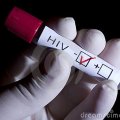
24 Oct hiv

By Linda Kokenge

I took an HIV test on October 4, 2011, four days before my 28th birthday.   A week or so prior, I decided that I needed to accomplish three things in my life:  get a job, move into my own apartment, and take an HIV test.  The first two things were relatively easy to accomplish. It was taking the test that scared me.

A little background on why I decided to take an HIV test.  I was black-out drunk when I met the man that I eventually called my boyfriend, who I’ll call Ronald.  I had gone out earlier in the night with a close friend, but ended up stumbling home alone after drinking a few too many whiskies. It was during my walk home that he and I met. What followed next is hazy; I can only recall bits and pieces of the evening. The one thing that I know for sure, though, is that I had unprotected sex with him that night.

As I would later find out, in 2008 Ronald had unprotected sex with a woman who was HIV-positive. When he finally told me, I was devastated.  I felt overwhelmed with thoughts of my own future and scared that I couldn’t trust him. Even though he claimed to be HIV-negative, thoughts about being HIV-positive were always in the back of my mind. When I finally came to terms with the fact that I needed to take the test for myself, I had a long conversation with my sister and called Planned Parenthood to schedule an appointment.

It’s hard for me to describe the feelings of gratitude I have for the women working at Planned Parenthood.  As I walked into the waiting room, the two women at the front desk recognized my feelings of anxiety, and were extremely professional when answering my questions. I immediately felt calm and more in control of the situation; I felt like I was in a safe space. These feelings of safety and support remained, even after I left an hour and a half later with my test result. Which, by the way, was negative.

I decided to tell my story for a number of reasons. Of all the emotions that I experienced while waiting for my test results, the feelings of guilt and fear created by the stigma surrounding HIV were the hardest to deal with. This needs to change. Accurate and real world accounts of people living with HIV should be accessible to young adults as they make decide to become sexually active. In order to be effective, these accounts must be based on facts and experience, not fear.

Along with the stress caused by social stigmas surrounding the virus, the stereotypes and misconceptions that are associated with taking an HIV test need to be addressed.  I was terrified to tell my loved ones and felt ashamed when I finally told my sister. No one should deal with the anxiety of taking an HIV test alone, especially when the source of those feelings is deeply rooted in misinformation.

If you have never taken an HIV test and feel like there may be a possibility that you have the virus, go take the test.  Find a Planned Parenthood in your area.  Surround yourself with people who care about you and do whatever you need to do to get there. The anxiety that you are feeling now is far worse than knowing the truth.  Whatever the result may be.

About the author: Linda Michelle Kokenge currently writes about feminism and social justice from her one bedroom apartment in Cincinnati, Ohio. A lover of dialogue and doomed sociologist, she hopes to someday start an after school program that puts critical theory to practice. You can find her on Twitter @feministeyeview or on her slightly neglected blog, Feminist Eye View.

Happy Love Your Body Day!

19 Oct lybd

Today is national Love Your Body Day. Some may not see the value in selecting a day to celebrate our bodies, but when you consider that 80% of American women are dissatisfied with their appearance, I think it’s a fabulous idea. Every woman should take a step back and appreciate what they’ve got — if not every day, then at the very least, on this particular day.

Women and girls are constantly bombarded with images and messages of what their bodies ought to look like — from Hollywood to the fashion and cosmetic industries, to print and TV ads. Images of thin, beautiful and “unblemished” (ahem, Photoshop) women crop up virtually everywhere, sending the subliminal — if not overt — message that our bodies, faces and hair need constant improvement.

Whatever happened to focusing on what your body can do instead of how it looks?

Like many women, for years I battled with a horrifically negative body image and an eating disorder. To this day, I still struggle with accepting my body. I’ve had to literally re-train my brain to focus on the positives, instead of comparing myself to Kim Kardashian’s figure (and berating myself for not looking like her). At 30 years old, my body sure isn’t what it was at 16. I don’t have a six pack and I don’t wear a size 3 anymore. But you know what? I’m awesome — curves and all!

So in the spirit of Love Your Body Day, here are a few reasons why I love my body: My body can bring life into this world and sustain it. My body can run a 5k and do squat jumps and push ups. My body has curves that my husband loves. My body is healthy. My body has art work that ten years later, I still love. My body has imperfections, but these imperfections tell a story — MY story.

It’s high time we start focusing on our positive attributes. And while we’re at it, let’s call out advertisers and the media that enforce unrealistic beauty standards, sexual ideals and gender stereotypes. To these ends, visit NOW-NYC’s blog, FIGUREatively Speaking and their #notcool page. And if you’re on Twitter, tweet why you love your body with the hash tag #LYBD.

What do you love about your body?


Note: This post is part of the 2011 Love Your Body Day Blog Carnival

Follow

Get every new post delivered to your Inbox.

Join 32 other followers